
Textile Testing Standards / 5 min READ
IS 2977:2026 — Fabric Dimensional Stability Testing Explained
Understand IS 2977:2026, the Indian standard for measuring fabric dimensional changes after soaking in water, and its role in textile quality control.
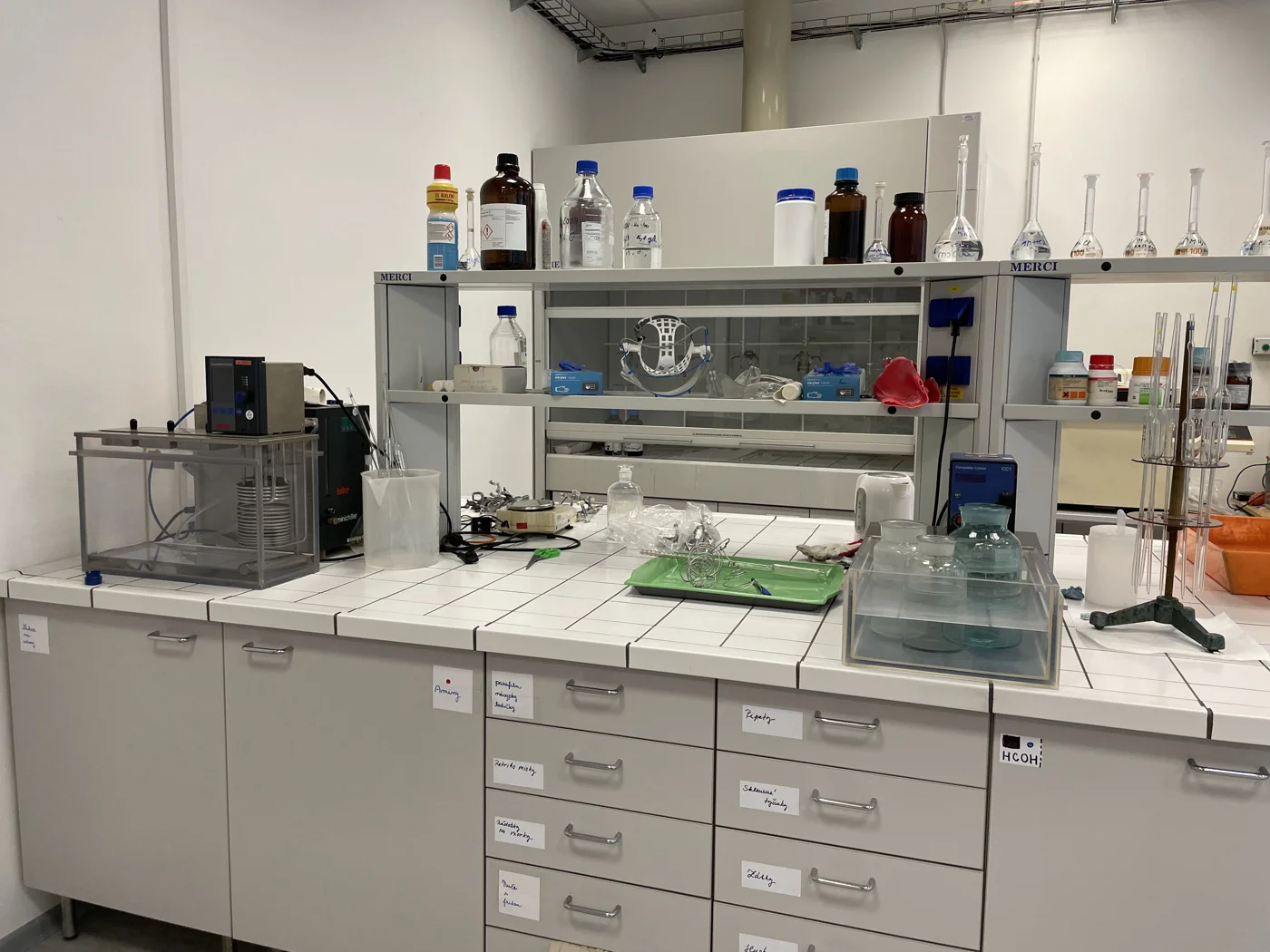
General textile-testing workspace; not a demonstration of IS 2977. Photo: Muselsom / Wikimedia Commons, CC BY-SA 4.0. Resized and converted to WebP.

Why dimensional stability matters
A fabric may have excellent strength, attractive colour, and a suitable texture. However, its dimensions can still change when exposed to water. For textile manufacturers, garment exporters, and quality control laboratories, these changes can influence the performance and suitability of the finished product. Dimensional stability testing helps manufacturers understand how fabrics respond to specified treatments and provides measurable information for evaluating material quality. In 2026, the Bureau of Indian Standards published a revised method addressing dimensional changes in fabrics other than wool when soaked in water. BIS lists IS 2977:2026 as the second revision, following the 1989 edition.
What Is Fabric Dimensional Stability?
Fabric dimensional stability refers to a textile material's ability to retain its dimensions when subjected to specified conditions. Depending on the fibre composition, fabric construction, finishing processes, and treatment conditions, a textile may shrink, expand, or experience different changes along its length and width. For example, a fabric may contract more in the lengthwise direction than in the widthwise direction. Such differences can affect garment measurements, pattern cutting, and consistency between production batches.
What Does IS 2977:2026 Cover?
IS 2977:2026 is titled Textiles — Method of Test — Determination of Dimensional Changes on Soaking in Water for Fabrics (Other Than Wool). It provides a standardized approach to determining dimensional changes resulting from water soaking. The method is relevant when laboratories need to evaluate the dimensional response of applicable fabrics under the specified soaking conditions. Importantly, a water-soaking test should not be confused with a laundering test. Washing may involve mechanical action, detergents, and other conditions that are not equivalent to soaking. The correct method should always be selected according to the product specification and testing requirement.
Why Can Fabric Dimensions Change?
Several factors can influence dimensional changes. Fibre characteristics: Different fibres respond differently to moisture. Fabric construction: Yarn arrangement, fabric density, and structural characteristics can influence dimensional behaviour. Manufacturing tension: Tension introduced during textile processing may contribute to dimensional changes when the material is subsequently relaxed. Finishing treatments: Some finishing processes are intended to improve dimensional stability. Exposure conditions: Water, temperature, treatment duration, and mechanical action can affect results, depending on the method used. Understanding these factors can help manufacturers investigate dimensional stability problems.
How Is Dimensional Change Evaluated?
In a dimensional stability test, fabric specimens are prepared and measured according to the applicable procedure. After undergoing the specified treatment, their dimensions are measured again. The difference between the original and final measurements is expressed as a percentage. A general calculation is: Dimensional Change (%) = [(Final Dimension − Original Dimension) ÷ Original Dimension] × 100 Consider an illustrative example. A fabric specimen has an original measured length of 250 mm. After treatment, the measured length is 242 mm. The calculated dimensional change is: [(242 − 250) ÷ 250] × 100 = −3.2% The negative result indicates contraction in that measured direction. This example demonstrates the calculation only. It does not establish a passing or failing result under IS 2977:2026.
Why Is Dimensional Stability Testing Important?
Garment manufacturing: Dimensional changes can affect finished garment measurements and fit. Fabric production: Testing can help manufacturers compare materials and evaluate processing changes. Quality control: Laboratories can monitor dimensional behaviour across production batches. Product development: Testing provides information for selecting suitable materials and finishing processes. Buyer requirements: Where dimensional stability is specified, manufacturers need results obtained using the required testing method.
Equipment and Laboratory Considerations
Dimensional stability testing involves more than simply placing a fabric sample in water. Depending on the specified procedure, laboratories may require suitable specimen preparation equipment, accurate measuring instruments, controlled treatment facilities, and appropriate conditioning arrangements. Testing personnel must also understand specimen orientation, marking, measurement, and reporting requirements. The equipment and procedures should be selected against the complete applicable standard. A general-purpose water bath or measuring device should not automatically be described as compliant with IS 2977:2026 without verification.
Does IS 2977:2026 Establish a Universal Shrinkage Limit?
Do not assume a universal acceptance limit from the existence of the test method alone. Confirm acceptance criteria against the complete applicable documents. A test method describes how a property is evaluated. Whether the resulting value is acceptable depends on the applicable product specification, contractual requirements, or other relevant criteria. Manufacturers should therefore distinguish between performing a test correctly and demonstrating that a product meets a specified performance requirement.
VizTech India's Perspective
At VizTech India, we believe reliable quality control begins with understanding the material and selecting the appropriate testing method. As textile standards evolve, manufacturers and laboratories benefit from reviewing their testing procedures, equipment suitability, and technical documentation. Our focus is helping businesses explore textile testing instruments and laboratory solutions relevant to their quality control requirements.
Conclusion
Dimensional stability is an important characteristic of textile performance. The publication of IS 2977:2026 provides laboratories with a revised Indian standard for evaluating dimensional changes in applicable fabrics after water soaking. For textile manufacturers, understanding the method and maintaining consistent laboratory practices can support better material evaluation and quality control decisions. Explore textile testing equipment and laboratory solutions with VizTech India. Contact VizTech India on WhatsApp: +91 7982627079.
Topics in this guide
Fabric Dimensional Stability Testing · IS 2977:2026 · textile shrinkage testing · fabric soaking test · textile testing standards India · dimensional change in fabrics · textile quality control
Explore related equipment and guides
Official sources and further reading
General purchasing guidance only. Refer to the current official test method and verified equipment documentation for technical decisions.